| Mythology to History
A brief overview of the irrefutable substantial evidence now available which corroborates Vedic statements, timelines, history and innumerable other facts stated in the vast Vedic literatures — much of which unfortunately have previously been regarded as mythology. Strong substantiation by scientific investigation now moves these narrations from the realm of mythology to that of historical facts. |
A detailed overview of the various contributions of ancient Vedic Indian culture to our civilization —authenticated with new evidences based on latest scientific methodologies. ORDER NOW » |
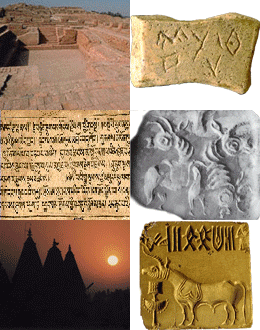 Numerous Recent Numerous RecentFindings in archaeology, genetics, linguistics, cultural continuity and other sciences are rewriting history. Read about it here. |
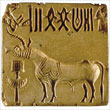
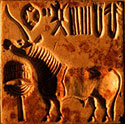
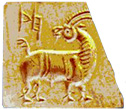 LAHORE: Pakistani archaeologists have discovered a rare Indus Valley civilization-era seal of an ibus in steatite dating back to 2,500-2,000 BC from the Cholistan area of Punjab province. LAHORE: Pakistani archaeologists have discovered a rare Indus Valley civilization-era seal of an ibus in steatite dating back to 2,500-2,000 BC from the Cholistan area of Punjab province. |
Endangered Historic Temple in India Saved from Slow Destruction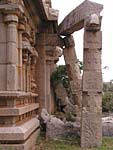
A magnificent historic temple among the ancient ruins of Hampi, India, receives a much-needed restoration. GHF and conservationists are hoping that the work being done at Hampi will serve as a model that will be applied to other significant cultural sites facing disintegration or destruction throughout the developing world. |
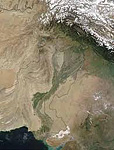
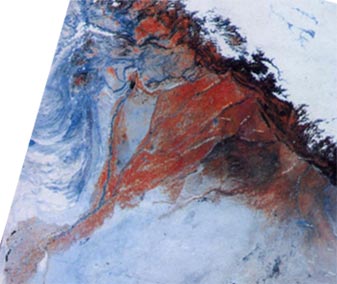
Woods Hole Study Concludes: Collapse of Ancient Indus Civilization Due to Climate Change |
|
|
 Brahmi Inscription: A short inscription engraved in the Brahmi characters has been discovered in the Edakal cave on the Ambukuthi hill in Kerala's Wayanad district. This is the fifth Tamil-Brahmi inscription discovered in the caves. Brahmi Inscription: A short inscription engraved in the Brahmi characters has been discovered in the Edakal cave on the Ambukuthi hill in Kerala's Wayanad district. This is the fifth Tamil-Brahmi inscription discovered in the caves. |
|
Mahua Dabar — a village in modern-day Basti, Uttar Pradesh, where weavers from Bengal had migrated early in the 19th century — was indeed a textile hub before the British razed it to the ground. |
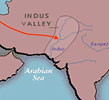 Aryan Invasion Debate Aryan Invasion DebateRead the latest articles on the Aryan Invasion and keep up to date on this important topic: Aryan Invasion Theory |
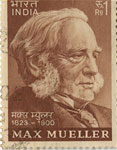 Indian scientist set to change world history Indian scientist set to change world historyWas Max Muller at fault when he propagated the White Invasion theory? Did Aryan Invasion not take place? Are we going to witness a change in world history? If reports of Prof Lalji Singh — an internationally acclaimed biotechnology expert — are to be believed, recent studies and research work on tracing genetic lineage of primitive human species have already suggested a different world history, enough to prove a major breakthrough in this field. No White Aryan Invasion? |
|
 Archaeologists to unravel origins of iron and steel in India Archaeologists to unravel origins of iron and steel in IndiaIn a new research, archaeologists have studied the origins of high carbon steel-making and iron in the southern Indian sub-continent. |
 Newly Discovered Archaeological Sites In India Reveal Ancient Life Newly Discovered Archaeological Sites In India Reveal Ancient LifeNewly discovered archaeological sites in southern and northern India have revealed how people lived before and after the colossal Toba volcanic eruption 74,000 years ago. |
|
|
|
|
|
 Decipherment of Indus Valley Vedic Seals in Modern Science Decipherment of Indus Valley Vedic Seals in Modern ScienceBy Prof. C.P. Trivedi The Indus Valley Civilization was scientifically developed. It has generated a quest to know their source of scientific development. It has been observed that the excavated seals and the tablets are the hoofs of their traces. The Vedic metaphors have been engraved on the seals. |
|
|
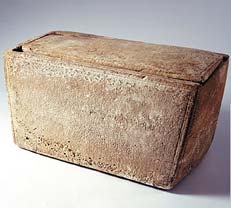
Ganging up on biblical archaeology |
|
|
Vedic Roots of Early Tamil Culture Full Story (Opens in new window) |
|
Art History Timelines |
|
|
The Vedic Harappans in Writing In the Harappan cities some 4200 seals, many of them duplicates, have been found which carry short inscriptions in an otherwise unknown script. There is not the slightest doubt that this harvest of Harappan writings is but the tip of an iceberg... By Dr. Koenraad Elst Full Story |
Despite the excellent work carried out by my Indian colleagues in the past quarter of a century, Indian rock art is not as well known abroad as it should be. And yet it is both extremely abundant and spectacular..." Rock Art |
|
Vastu Shastra- Sacred Vedic Architecture
|
UP village offers a fresh clue to solve a Harappan puzzle The remains found in western UP. SINAULI, NOVEMBER 17: For thousands of years, the fields of Sinauli in western Uttar Pradesh hid their secret well. But now its past is out in the open. Beyond the village's brick lanes and lounging buffaloes, a burial site of the Harappans dating back to about 2,600 BC has finally given up its dead.. UP Village |
|
Origins of Iron Ore Working in India |
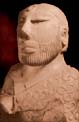 Sculptures of the Indus Valley Sculptures of the Indus ValleyThe story of Indian art and sculpture dates back to the Indus valley civilization of the 2nd and 3rd millennium B.C.E. Tiny terra-cotta seals discovered from the valley reveal carvings of peepal leaves, deities and animals. A golden chapter of Indian sculpture opens in the 3rd century B.C.E., when the Mauryan Emperor Ashoka adopted Buddhism and set out to spread it's teachings far and wide... Indus Sculptures |
|
Archaeology top |
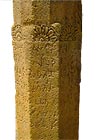 The Heliodorus Column The Heliodorus ColumnAn archaeological discovery shows that there were western followers of Vedic principles twenty-two centuries ago. The column erected by Heliodorus, a Greek ambassador to India in the second century B.C.E., first came to notice in 1877, during an archaeological survey by General Cunningham. To our knowledge, Heliodorus is the earliest Westerner on record to adopt Vedic principles... Heliodorus Column |